Laguiole GC pocket knife, “Etretat” mammoth molar

REF : FE_LAGC_MOLET

1,378.00

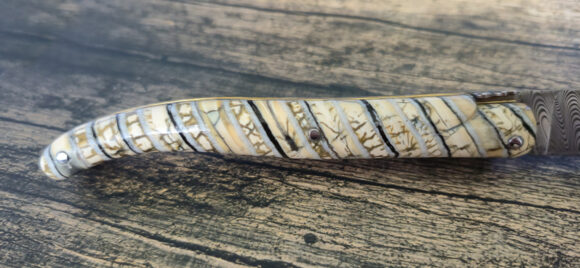
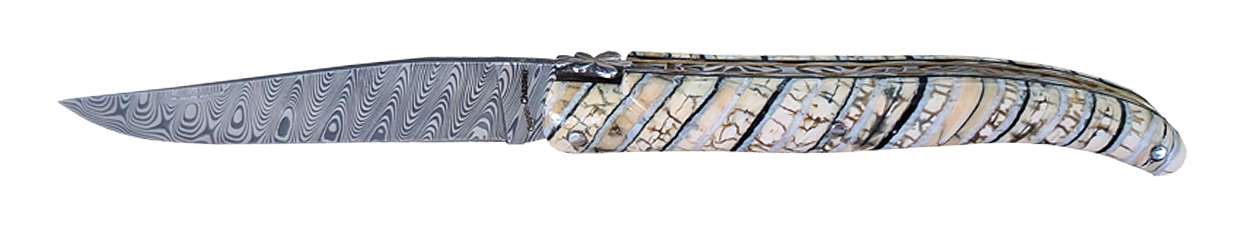
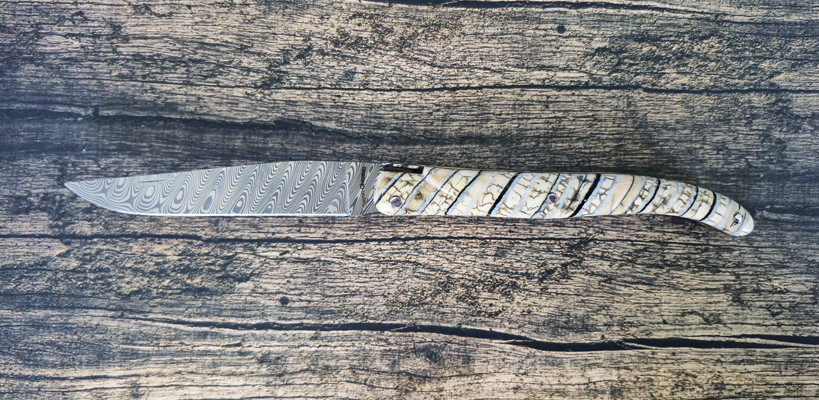
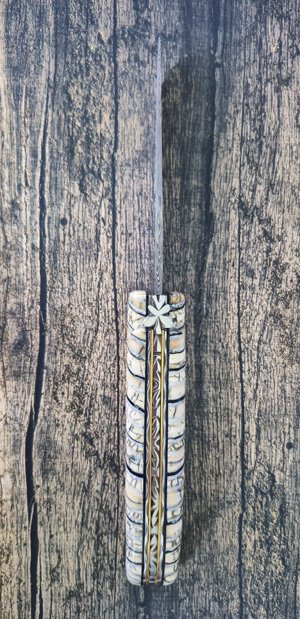
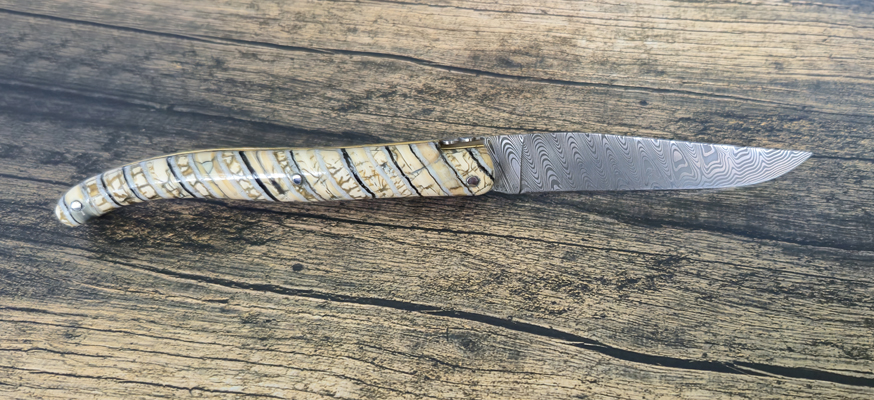
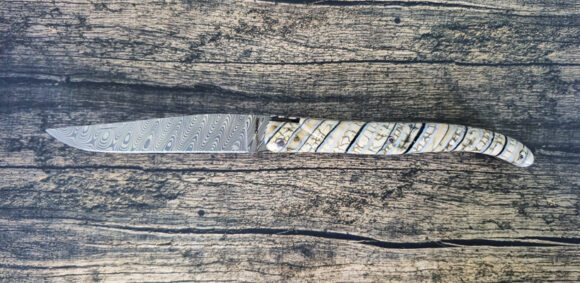
This Laguiole GC folding knife features a handle made from mammoth molar named “Etretat” because its colors echo the chalk cliffs of the Alabaster Coast.

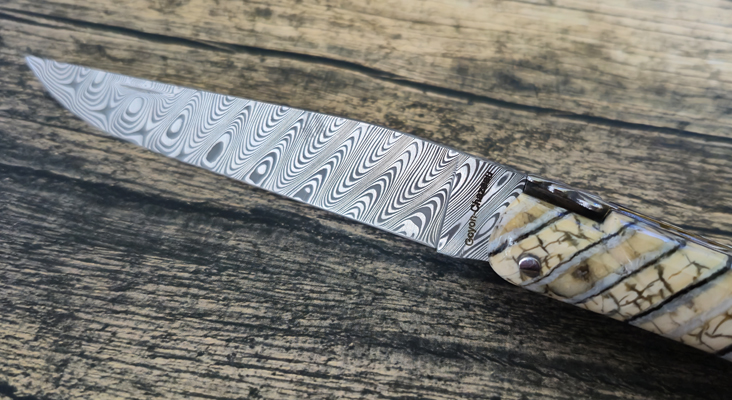
It is a forced noch knife, crafted with "Twist" stainless steel Damascus blade that reveals fine stripes and stars after grinding and finishing.
The GC bee, the spring, and the stainless steel plates are chiselled by hand.

This unique knife is in stock and available for purchase.

Length
22 cm
Width
2.4 cm
Weight
125 g
Finish
Matt
Blade length
About 10cm
Material
Mammoth
Steel
Stainless damascus steel

1 in stock (can be backordered)

1378.00
Couteau Laguiole Luxe, molaire de mammouth Etretat Couteau Laguiole Luxe, molaire de mammouth Etretat
Laguiole GC

A knife of excellence

This Laguiole knife is a one-of-a-kind, exceptional piece.

Each stage of its production, from assembly and adjustment to shaping, polishing, and sharpening, was carried out by hand in our workshop near Thiers, the French cutlery capital.

  • 100% handmade in France.
  • Damascus stainless steel blade made of Damasteel DS93X “Twist”
  • Plunge line
  • Full grinding
  • Brass sides
  • Stainless steel double sides chiselled by hand
  • Black layers
  • Chiselled spring featuring the GOYON CHAZEAU bee
  • Handle made of stabilized ivory/grey/black mammoth molar
  • Stainless steel rivet assembly

Sold in a black gift box with a beige, full-grain leather pouch.
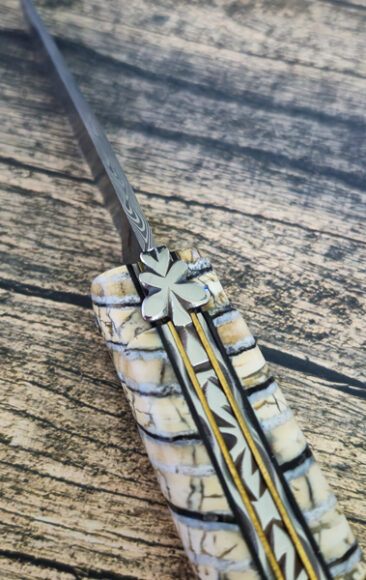
GC bee, sides and spring chiselled by hand GC bee, sides and spring chiselled by hand

Care instructions

Carbon steel knives, including those with Damascus blades, are prized for their exceptional sharpness, but they are more susceptible to rust than stainless steel.
They do not fare well when exposed to water or acidic foods.
In marine or tropical environments, exposure to salty air and high humidity can significantly accelerate corrosion, requiring even more rigorous maintenance.

We recommend wiping the blade with a soft sponge after each use. Food connoisseurs may take it a step further by wiping the blade with a drop of wine.

Do not leave in prolonged contact with water, a heat source, or chemicals.
Avoid getting the handle wet.
Avoid extreme temperature fluctuations.

Dry immediately and carefully, without forgetting the inside of your knife to protect its mechanism.
Also remove any deposits of material that may slip into the mechanism and impair the knife’s function.

Store the knife in its leather pouch.

Sharpen the blade as soon as the knife seems to be cutting less effectively.

"Etretat" mammoth molar

Feeling from the workshop

Mammoth molars come from the frozen soils of the Arctic regions of Europe and North America.
These massive teeth, almost always perfectly preserved, are stabilized, stained, and cut into cross-sections.
They feature distinct layers that account for their beauty and value.